
































Business IP phone system in Morocco: the complete guide
IP phone systems in Morocco: hosted or on-premises, 3CX or Yeastar, numbers, features, handsets, network, project steps and costs. A guide for SMBs.
The short answer: an IP phone system replaces your ageing PBX with software or an appliance that carries calls over the IT network. It brings remote working, mobile apps, call queues, recording and CRM integration, often with a more predictable telecom bill. Four decisions make or break the project: hosted or on-premises, 3CX or Yeastar, how to keep your numbers, and the state of your network. This guide lays the foundations; our detailed articles go deeper on each point.
At ALLSAFE SOLUTIONS, we are a 3CX partner and a Yeastar certified partner in Casablanca, and we deploy IP phone systems for SMBs in Morocco, Africa and Europe.
What is an IP phone system?
A phone system, or switchboard, routes incoming calls, connects extensions and handles outgoing calls. A traditional PBX did this with a proprietary box and dedicated telephone cabling. An IP phone system, also called an IP PBX, does the same job over the IT network, using the SIP protocol.
In practice, an IP phone system has four building blocks:
- The core system: software (3CX) or an appliance (Yeastar P-Series), hosted in the cloud or installed on your premises.
- The lines: a SIP trunk from a carrier, or your existing lines connected through a gateway.
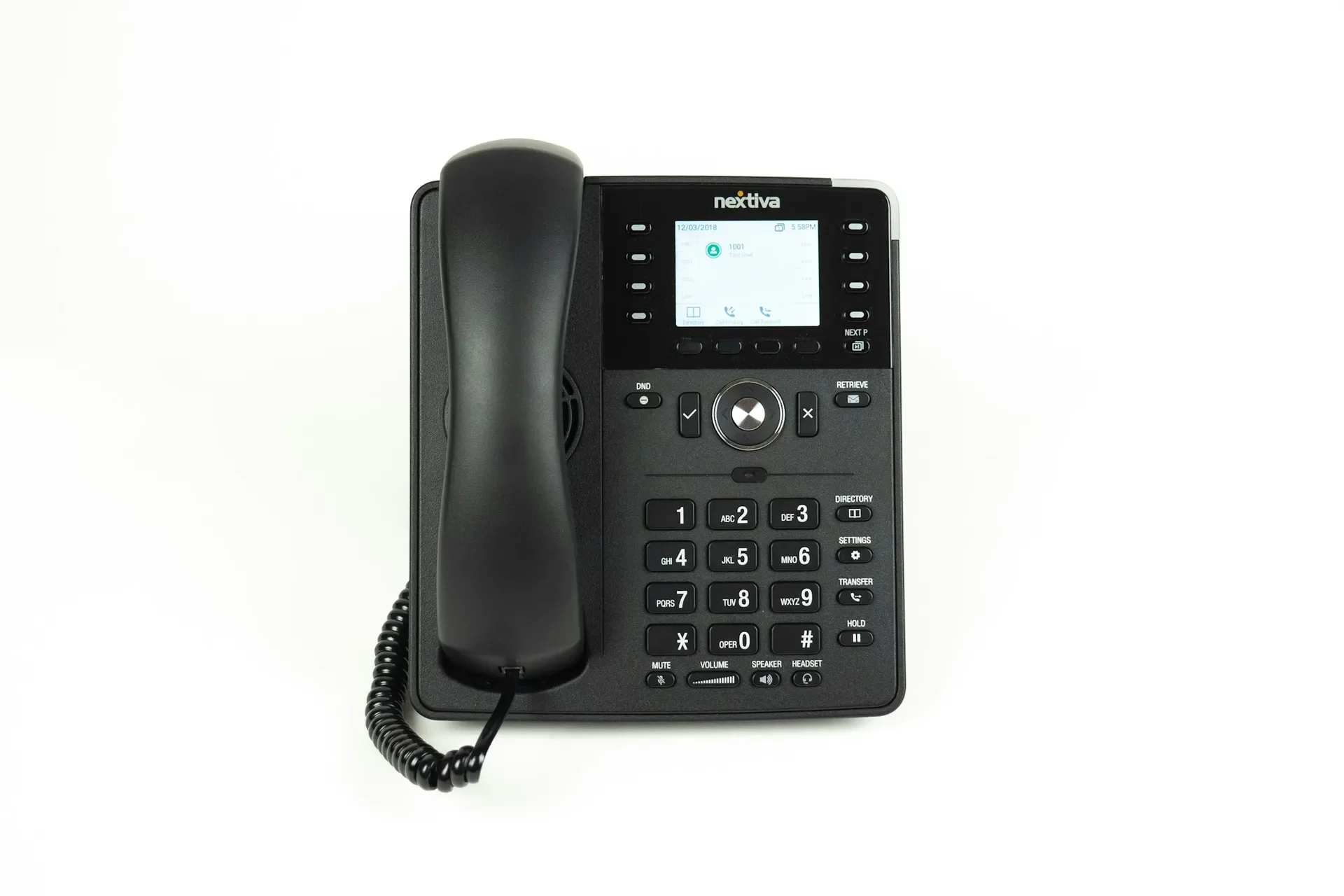
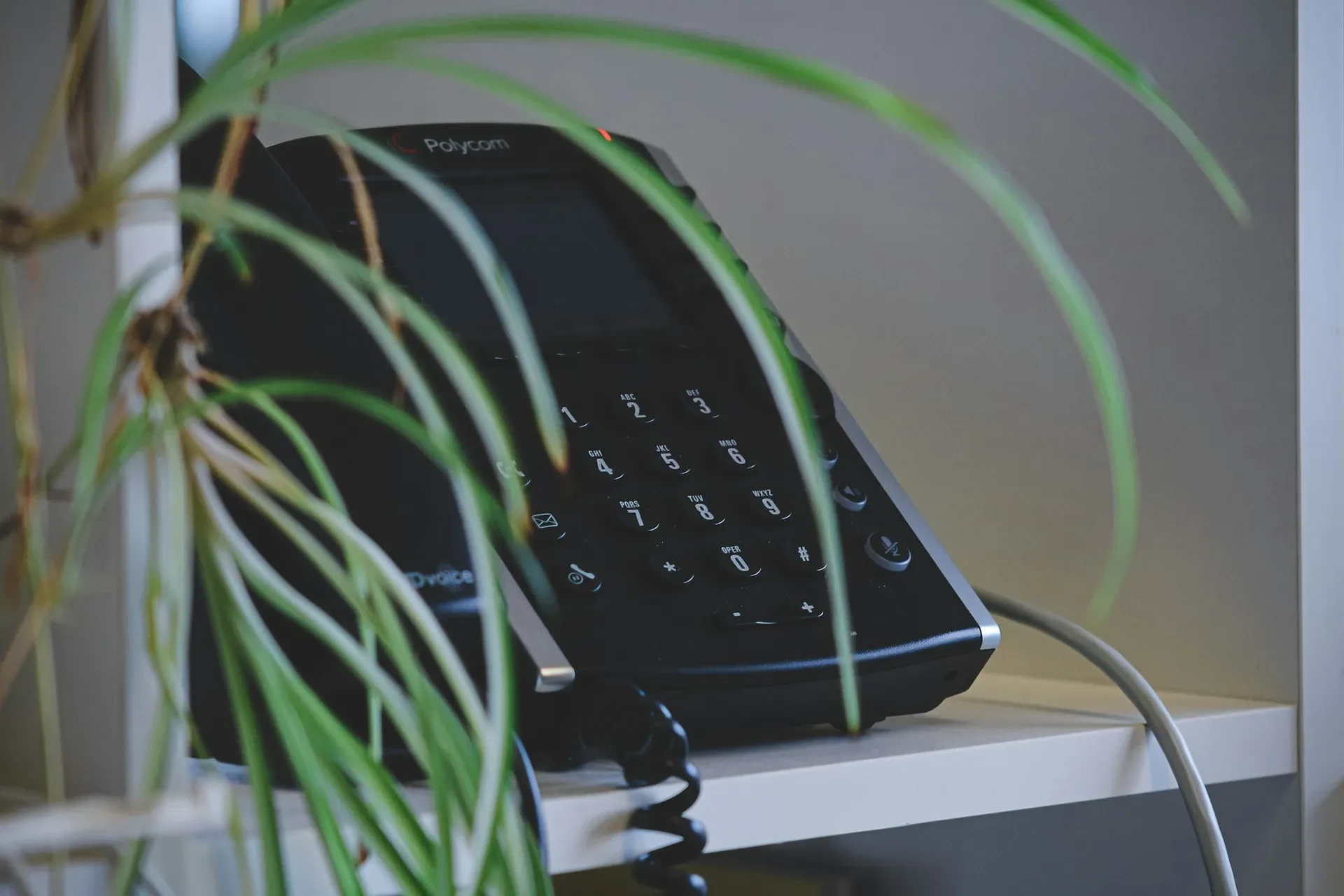
- The endpoints: IP desk phones, mobile and desktop apps, headsets, door stations.
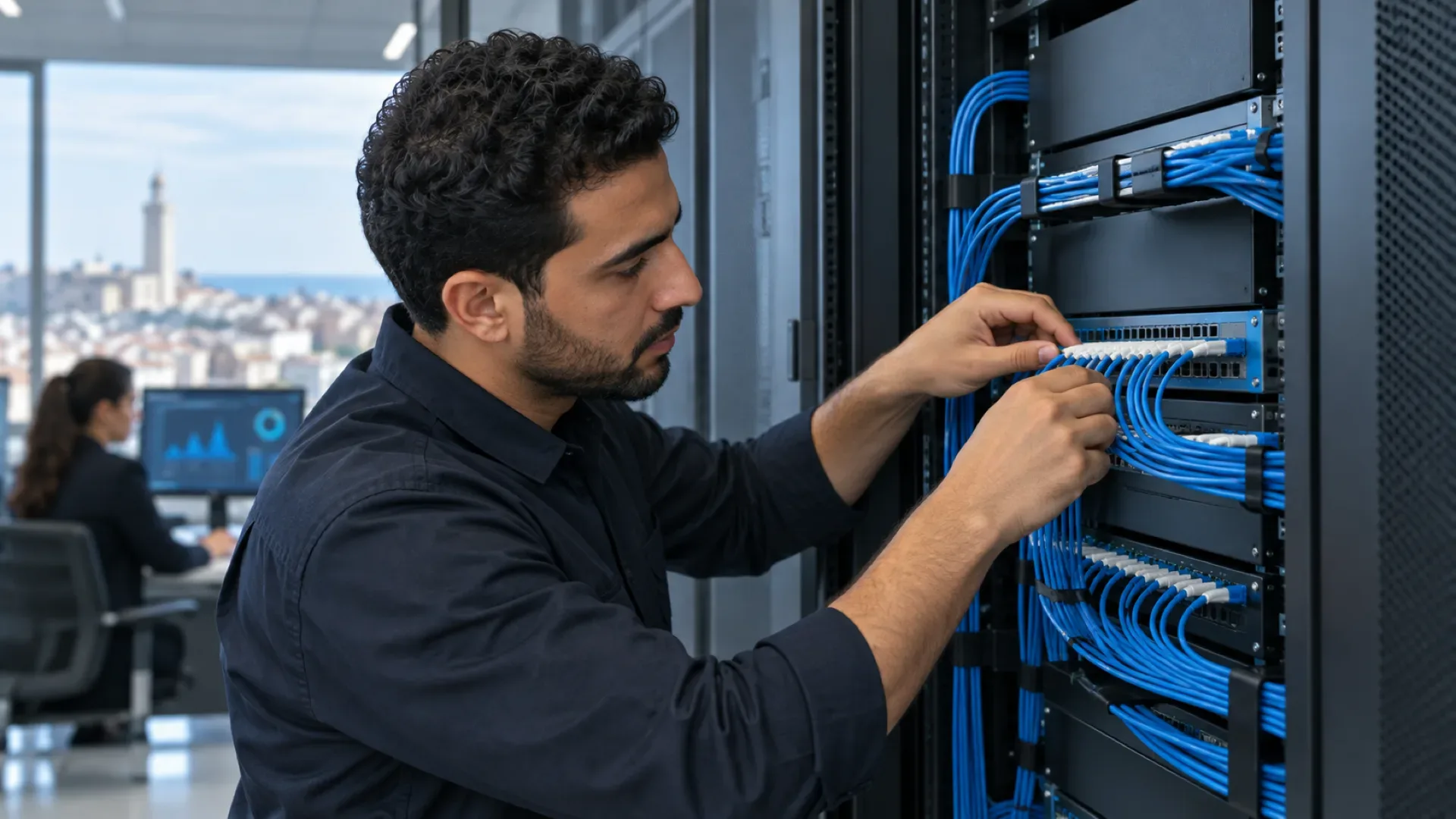
- The network: cabling, switches, WiFi, firewall and internet links that carry the voice.
Any of these blocks can sink the project if it is neglected. That is why we always look at the whole picture, not just the product.
Hosted or on-premises: the first decision
| Criterion | Hosted (cloud) system | On-premises system |
|---|---|---|
| Equipment on site | No server, only the phones | A server or appliance in your comms room |
| Remote work and multi-site | Native, each site connects to the cloud | Possible, with secure remote access |
| Internet outage | No calls at the affected site | Internal calls continue, external if lines are local |
| Analogue lines | Gateway needed on site | FXO ports on the appliance or local gateway |
| Administration | Centralised updates and backups | To be covered in the maintenance contract |
| Typical profile | Mobile teams, several sites, remote work | Physical sites, reception, door stations, lines to keep |
For most service SMBs, hosted is the simplest. For a clinic, a hotel or an industrial site where reception must keep working even when the internet is disrupted, on-premises still makes sense. We cover these trade-offs in migrating to IP telephony: what really changes.
3CX or Yeastar at a glance
The two solutions we deploy most follow different logics:
- 3CX is software, licensed by simultaneous calls rather than per user. It stands out for its mobile and browser apps, call queues, WhatsApp channel and CRM integrations. It suits sales teams, customer service and multi-site companies. See why 3CX wins in SMBs.
- Yeastar P-Series is first of all a standalone appliance, simple to administer, that accepts ports for analogue lines, with a cloud edition as well. It suits physical sites with many desk phones.
If your teams already live in Microsoft Teams, there is a third option. We compare all three criterion by criterion in 3CX, Yeastar or Teams Phone: which phone system for a Moroccan SMB.
Your numbers: what you keep
Changing phone systems does not mean changing numbers. There are two routes, to be confirmed with your carrier:
- Connect your current lines to the new system through a gateway (analogue, digital or GSM). Nothing changes on the carrier side; this is often the transition option.
- Move to a SIP trunk: the carrier delivers your numbers directly over the internet or a dedicated link, with no physical line. This is the most flexible option for remote work and multi-site setups.
Conditions, lead times and porting options depend on each carrier and each contract. We check them with the carrier before setting the cutover date, and we keep the old system running in parallel until every number is validated.
Features that change day-to-day work
A modern IP phone system provides, out of the box or depending on the licence plan:
- IVR menus: “press 1 for sales” routes callers without tying up reception.
- Call queues: calls are distributed across several agents, with hold messages and automatic callback.
- Call recording, useful for training and disputes, to be handled in line with personal data protection rules, see Morocco’s data protection law 09-08.
- Mobile and desktop apps: staff keep their business number wherever they are.
- CRM integration: the customer record pops up on the call, history is logged, one click places a call.
- WhatsApp and web chat: on 3CX, messages land in the same queues as calls, see WhatsApp Business in 3CX.
- Statistics: missed calls, waiting times, load per agent.
Phones and endpoints
Not everyone needs a desk phone. We distinguish three profiles:
- Reception and operator: phone with a display and busy-lamp keys, often with an expansion module.
- Office: simple IP phone powered by the network (PoE), or a headset with the desktop app.
- Mobile and remote work: smartphone app only, no hardware.
We mainly install Fanvil and Yealink handsets. Existing SIP phones are often reusable, and analogue phones, fax machines or door stations connect through an FXS gateway.
Network prerequisites
This is the most underestimated part, and the leading cause of choppy calls or one-way audio. Before installing the phone system, check:
- The internet link: enough upload bandwidth, and ideally a second link or 4G backup. See business fibre in Morocco: choosing and securing your link.
- The firewall: SIP ALG disabled, rules restricted to the carrier’s addresses, priority given to voice.
- The local network: separate voice VLAN, QoS, PoE switches sized for the phones.
- WiFi, for mobile apps used on site, see high-density enterprise WiFi.
The ten most common mistakes are described in the mistakes that ruin call quality.
Steps of an IP phone system project
- Usage and network audit: call volumes, peak hours, sites, remote work, numbers, legacy equipment.
- Design: hosted or on-premises, product choice, dial plan, IVR menus, queues, choice of phones.
- Pilot: a few real users test the system before all licences are purchased.
- Network preparation: VLANs, QoS, PoE, firewall rules, internet backup.
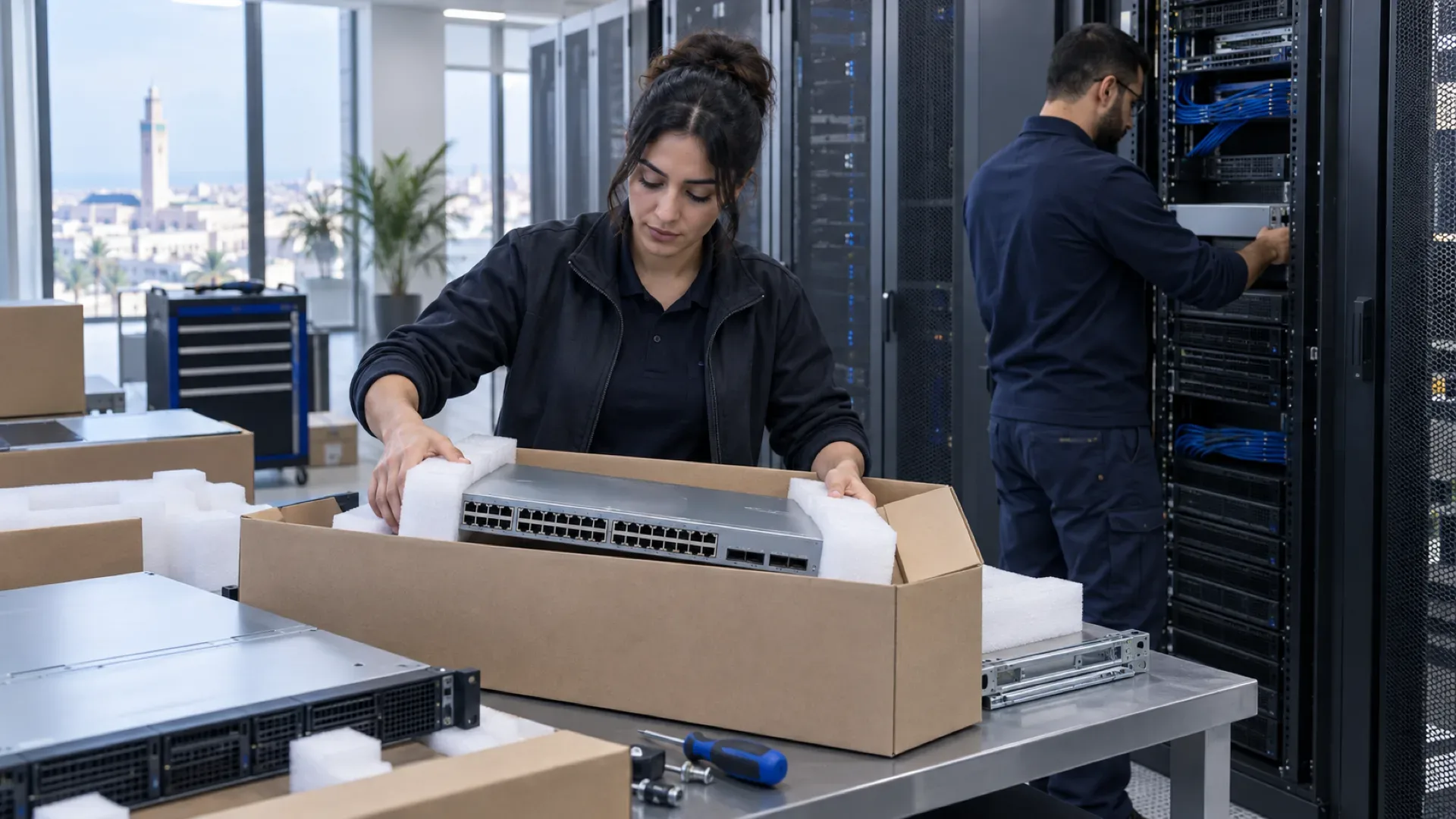
- Deployment and cutover: installation, line connection, training, old and new systems in parallel.
- Operations: monitoring, updates, configuration backups and changes.
Cost structure, without surprises
Every project is quoted on your own case, but the cost items are always the same:
| Cost item | Type | What makes it vary |
|---|---|---|
| Phone system licence | Annual or subscription | Simultaneous calls (3CX) or feature plan (Yeastar) |
| Hosting or hardware | Monthly or purchase | Cloud or appliance, redundancy |
| Phones and gateways | Purchase or rental | Number of desk phones, analogue lines to keep |
| Carrier | Subscription and usage | Number of channels, numbers, destinations called |
| Deployment | One-off fixed fee | Number of sites, complexity of menus and queues |
| Maintenance and support | Monthly | Service level, monitoring, on-call |
Always compare the full three-year cost, not just the first year’s licence price.
The mistakes we see most often
- Choosing the product before auditing the network, then discovering dropouts in production.
- Forgetting equipment connected to a line: door station, fax, alarm, payment terminal.
- Switching everything over one weekend with no coexistence period or rollback.
- Leaving the admin interface exposed to the internet and international calls open, an entry point for toll fraud.
- Not training reception, which remains the phone system’s first user.
Checklist before launching your project
- Number of users, remote workers and simultaneous calls at peak times.
- List of numbers to keep and current carrier contracts.
- Inventory of phones, gateways, door stations, fax machines and alarms.
- Expected features: IVR, queues, recording, CRM, WhatsApp.
- Hosted or on-premises choice, and expected behaviour during an internet outage.
- Network status: firewall, voice VLAN, QoS, PoE, WiFi, second link.
- Full three-year cost and maintenance contract.
How we do it
We start with a free usage and network audit, to tell you whether the phone system will be reliable before talking about products. We then propose an architecture, a reasoned choice between 3CX and Yeastar and a three-year quote, followed by a pilot with your users. The cutover happens in stages, with numbers validated with your carrier, staff training and a planned rollback. In production, the phone system, the lines and call quality are monitored 24/7, and a critical incident is handled in under 15 minutes.
All of this is part of our IP telephony offering. Browse our case studies, then request your free initial audit: we reply within 24 business hours with a recommendation tailored to your business.
Frequently asked questions
What is an IP phone system?
It is a switchboard (IP PBX) that handles the company’s calls over the IT network instead of dedicated telephone cabling. It can be software hosted in the cloud, a local server or an appliance, and it connects desk phones, mobile apps and carrier lines.
Can you keep your numbers when moving to an IP phone system?
In the vast majority of cases, yes: either by connecting your existing lines to the new system through a gateway, or through a SIP trunk from your carrier. Conditions depend on the carrier, which we consult before setting the schedule.
Do you have to replace every phone in the company?
Not necessarily. Recent SIP handsets are often reusable, analogue phones connect through a gateway, and some staff can work with the mobile or desktop app alone. An inventory of existing equipment settles it phone by phone.
Does a hosted IP phone system work without internet?
No: a hosted system depends on the site’s internet connection. An on-premises system keeps handling internal calls, and external calls if lines arrive on site directly. Either way, a second internet link or 4G backup is strongly recommended.
About the editorial team
ALLSAFE SOLUTIONS
Network, security and cloud engineers
Written by the engineering team at ALLSAFE SOLUTIONS, a managed IT provider founded in Casablanca by network, security and cloud engineers. Our articles draw on the projects we deliver for clients in Morocco and abroad.
LinkedIn