




































IP phone system price in Morocco: what drives the cost and how to get a fair quote
Business phone system price in Morocco: on-premises or hosted PBX, 3CX, Yeastar and Grandstream licensing, phones, gateways, SIP trunk, network and support.
The short answer: there is no such thing as “the price of a phone system” in Morocco, because two companies of the same size can have very different needs. The real cost is built from six items: the PBX itself (appliance, server or cloud), the licensing model, the desk phones, the gateways that connect your GSM, analogue or E1 lines, the network that carries voice, and installation followed by support. The factor that weighs most is not headcount but the number of concurrent calls at peak times, and the list of lines you need to keep.
At ALLSAFE SOLUTIONS, we design, install and maintain IP phone systems in Casablanca and across Morocco. We are a 3CX partner, a Yeastar certified partner and a Grandstream integrator, and we install Dinstar and OpenVox gateways. We supply hardware and licences to businesses, with or without installation; we are not a distributor. This article deliberately gives no amounts: prices vary over time, with exchange rates and with configurations. It does explain what pushes a bill up or down, and how to prepare a quote request that leaves no bad surprises.
The six items that make up the cost
| Cost item | What makes it vary | Payment |
|---|---|---|
| The PBX | On-premises, virtual server or hosted; concurrent call capacity | Purchase or subscription |
| Licences | Edition, concurrent calls, feature plan, remote users | Often annual |
| Phones | Number of users, profiles (reception, desk, mobile, DECT), apps | Purchase |
| Gateways | GSM/4G, analogue, E1 lines to keep | Purchase |
| Network | PoE switches, voice VLAN, QoS, firewall, second internet link | Purchase, sometimes already in place |
| Installation and support | Complexity of call flows, number of sites, support level | Fixed fee then contract |
On top of this come the calls themselves, billed by your carrier according to your SIP trunk, fixed lines or mobile plans. That item does not depend on the integrator, but the PBX architecture affects how to reduce it, for example by routing calls to mobiles through a GSM gateway.
On-premises or hosted: two cost logics
The first decision shapes the whole budget.
An on-premises PBX is an appliance or server in your premises. That is the case of a Yeastar P-Series, a Grandstream UCM, or 3CX installed on your own server. The investment is concentrated upfront; internal calls keep working if the internet goes down, and analogue lines can be connected directly through the FXO ports built into some models, according to vendor datasheets.
A hosted PBX runs in a datacentre: 3CX hosted by 3CX or in your own cloud, Yeastar P-Series Cloud Edition. There is no central box to buy, remote access is simpler, but every call depends on your internet connection, and the cost becomes recurring.
| Criterion | On-premises | Hosted |
|---|---|---|
| Upfront spend | Higher (hardware) | Lower |
| Recurring spend | Licences or plans, support | Hosting subscription and licences |
| Analogue, GSM, E1 lines | Direct connection or local gateway | An on-site gateway is still needed |
| Internet outage | Internal calls continue | Everything stops without a backup link |
| Multi-site, remote work | Possible, needs configuration | Natural |
There is no universal answer. A practice that keeps analogue lines and an alarm wired to the phone line often does better on-premises. A multi-site company with many mobile sales staff gains from hosting. We compare both scenarios in our guide to business IP phone systems in Morocco.
Licensing: three very different models
This is the most misunderstood part of any quote, because each vendor charges differently. The rules below reflect what vendors publish at the time of writing.
3CX: by concurrent calls and edition
A commercial 3CX licence is an annual subscription for a whole system, not per user. Its price depends on the edition (Basic, PRO or AI) and the concurrent call capacity. Each size does, however, have a maximum number of users published by 3CX. Two classic traps: picking Basic when you need queues or call recording (PRO features), and forgetting that hosting by 3CX is billed separately for commercial editions. Everything is detailed in 3CX licence: which edition to choose.
Yeastar: an appliance, then a feature plan
The Yeastar P-Series appliance ships with a free Basic plan for core telephony. Advanced features are enabled by annual or monthly subscription: Standard (Linkus apps, remote access), Enterprise (call centre, CRM, omnichannel messaging), Ultimate (video, Call Flow Designer). The cost therefore depends on the model and the plan, and the Cloud Edition requires at least the Enterprise plan.
Grandstream: no per-user licence
Grandstream UCM IP PBXs charge no licence per user or per call: the features listed in the datasheet are included in the appliance. The UCM RemoteConnect cloud service, which makes remote connections easier, has a free basic plan and paid higher plans. It is an attractive model when recurring spend must stay low, provided the built-in features cover your needs.
To compare the three approaches beyond price, read 3CX, Yeastar or Teams Phone for an SMB.
Phones: the most visible expense
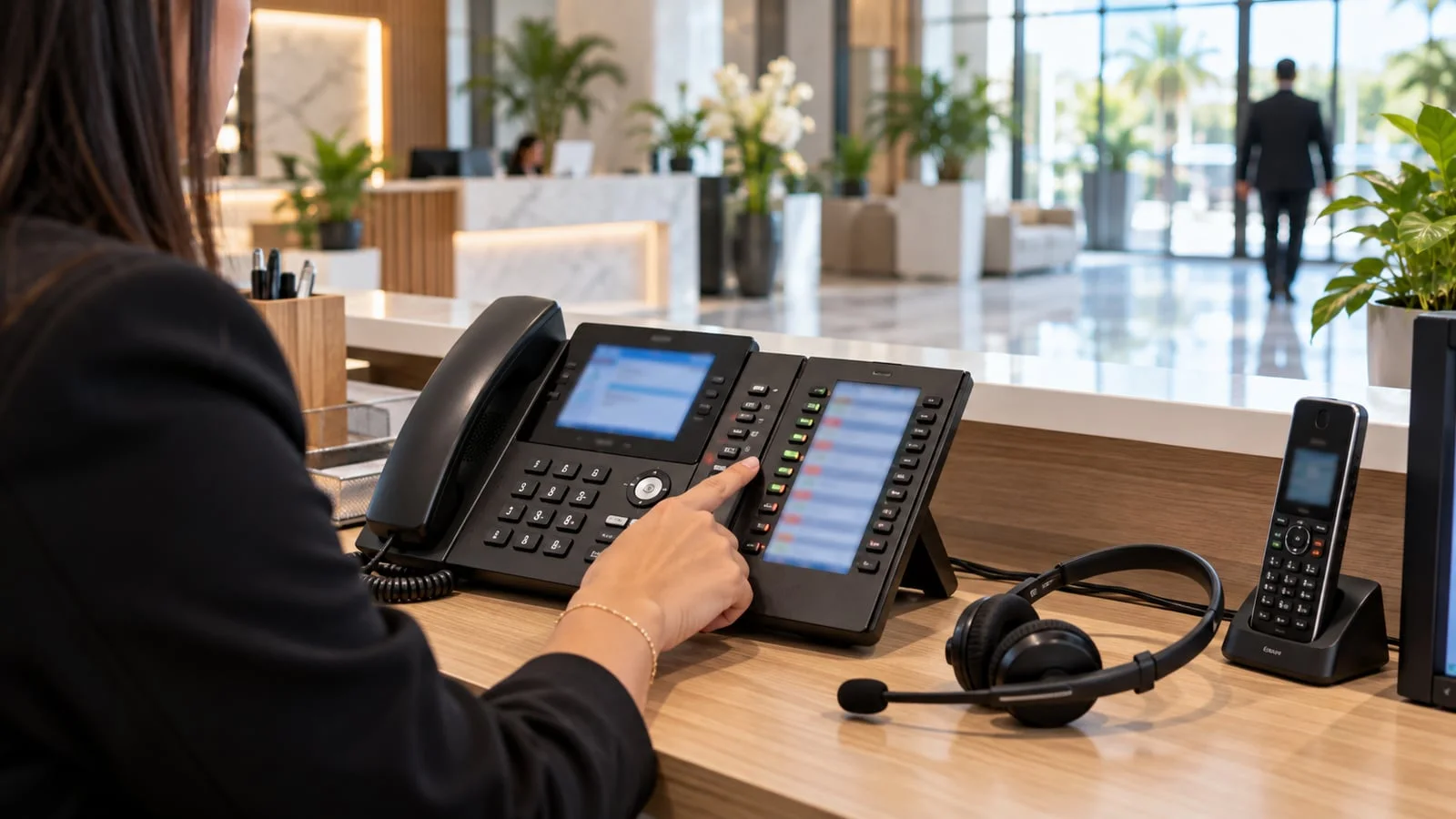
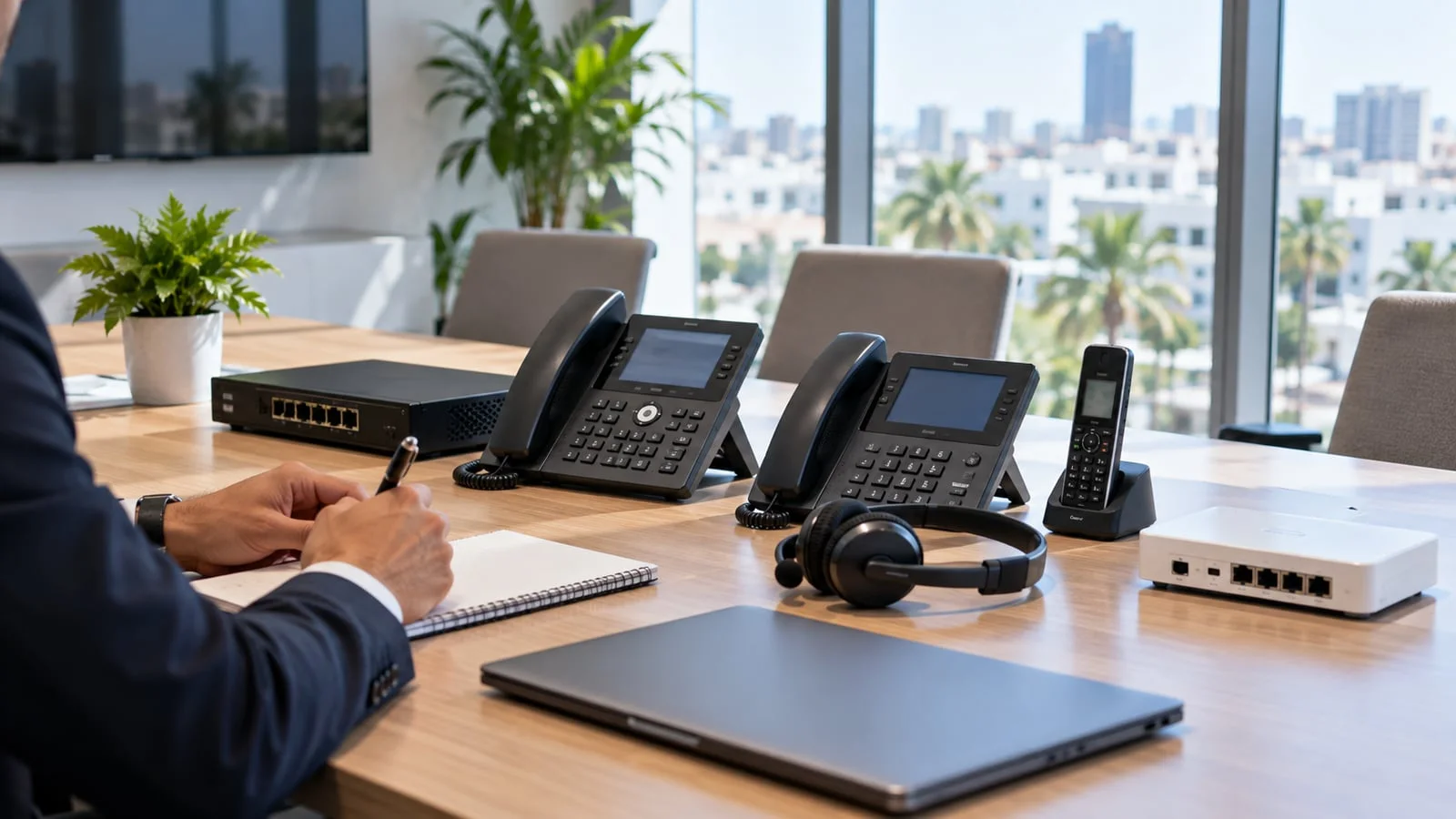
The number of phones is easy to count; their type is less so. A reception phone with a colour screen and busy-lamp keys, a standard desk phone, a cordless DECT handset for a warehouse, a headset for a call-centre agent: each profile has its own equipment. Softphone apps (3CX, Yeastar Linkus, Grandstream Wave) often remove the need for a physical phone for sales staff and remote workers, which reduces the hardware to buy.
Three checks to avoid unnecessary spend:
- Compatibility of the phones with the chosen PBX, and automatic provisioning.
- Reuse of existing SIP phones, if their vendor still updates them.
- PoE: a phone powered by the switch avoids one power adapter per desk, but requires compatible switches.
We compare brands in business IP phones: Grandstream, Yealink or Fanvil.
Gateways: GSM, analogue, E1
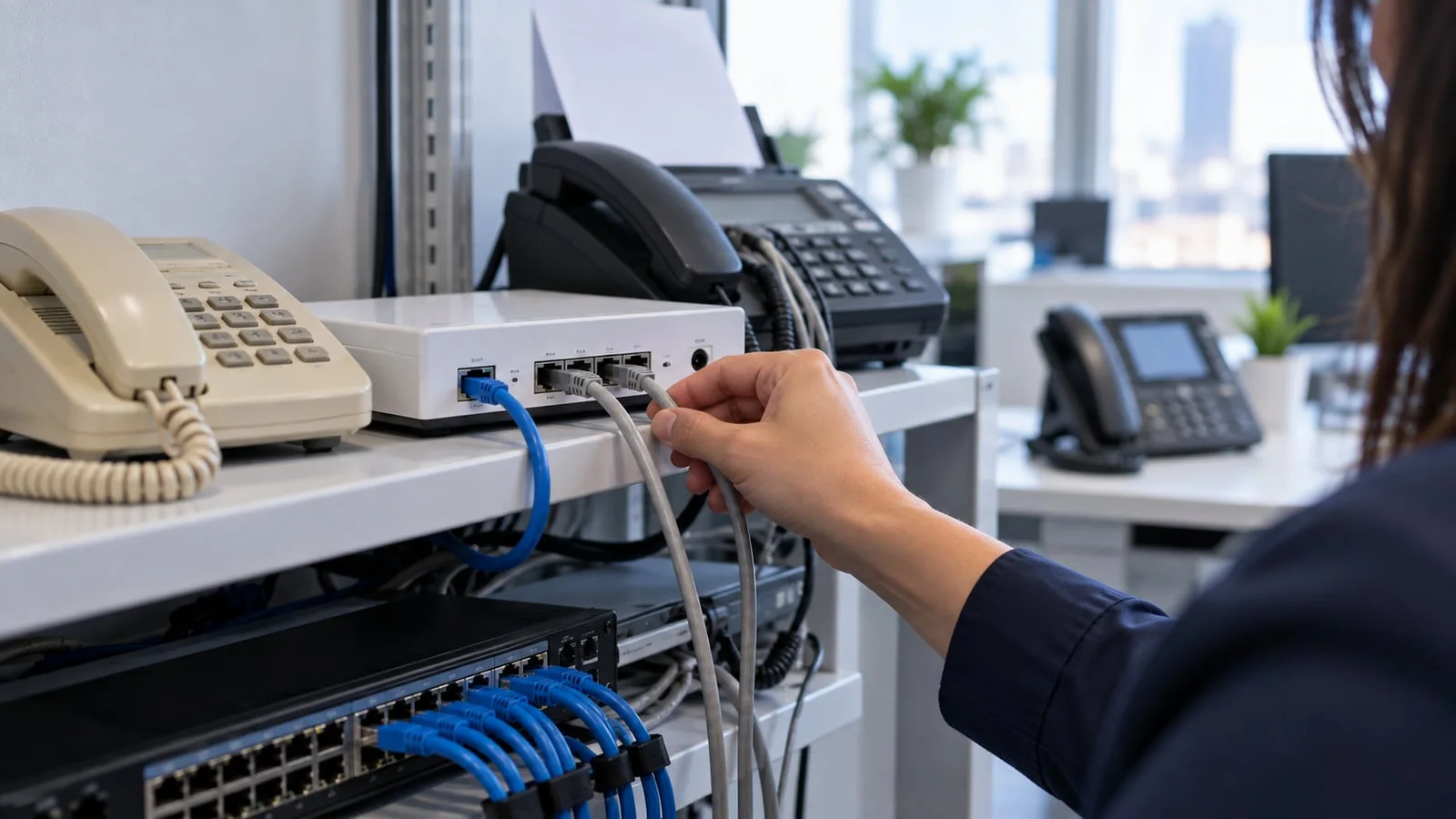
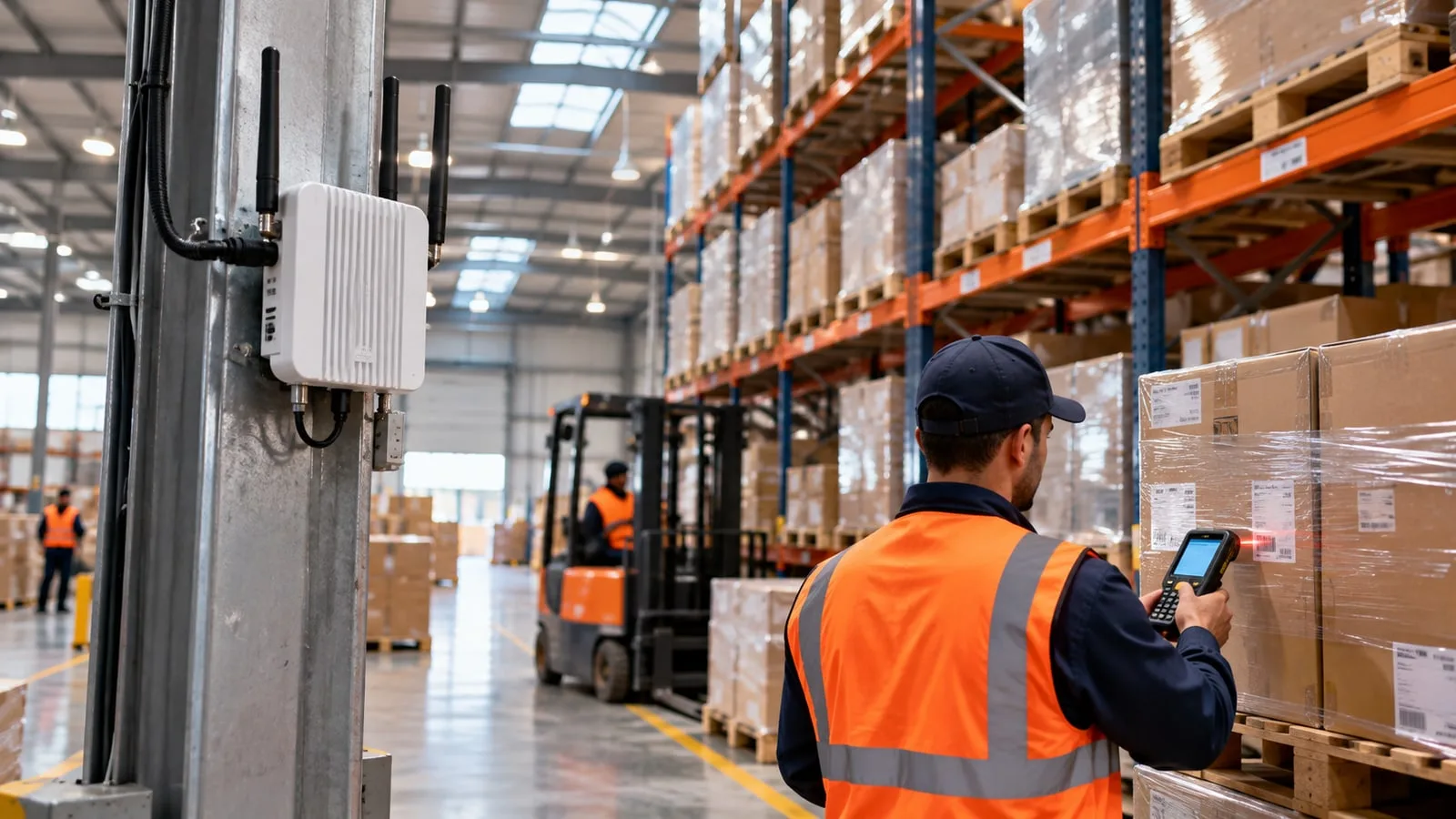
Many Moroccan businesses do not start from scratch: they have analogue fixed lines, mobile carrier SIM cards, sometimes an E1 (primary rate) link on an old PBX. Keeping them requires a gateway, and it is often the item missing from first quotes.
- GSM/4G gateway: it takes SIM cards and lets the PBX call mobiles over the mobile network. We install the Dinstar (UC2000 series) and OpenVox ranges, as well as Yeastar gateways. See GSM/4G VoIP gateway for your PBX.
- FXO/FXS gateway: it connects analogue lines (FXO) or analogue devices such as a fax, door entry phone or payment terminal (FXS), when the PBX lacks enough built-in ports.
- E1 gateway: it connects a digital E1 link to the IP PBX, or allows a gradual migration from an old PBX.
The cost depends on the number of ports needed and the type of lines. We detail these choices in FXO, FXS and E1 gateways.
SIP trunk and carrier
A SIP trunk replaces physical lines with voice channels carried over the internet or a dedicated link. Its cost depends on the carrier, the number of channels, the numbers (including porting your current ones) and the calling plan. The integrator does not set that price, but must check compatibility between the carrier and the PBX, and size channels on your real concurrent calls. See SIP trunk: keep your business numbers.
The network: the investment that decides call quality
A brand new IP PBX on a poorly prepared network gives choppy audio, dropped calls and robotic voices. The budget should therefore cover, if not already in place:
- enough PoE switches to power the phones;
- a voice VLAN and QoS that prioritise voice over other traffic;
- a properly configured firewall, with no disruptive SIP ALG;
- a second internet link if the PBX is hosted or the business depends on the phone;
- a UPS so the PBX and switches survive a power cut.
This item is sometimes zero if your network is recent, sometimes significant if the cabling is old. That is exactly what the audit measures. The most common mistakes are listed in IP telephony: 10 mistakes that ruin call quality.
Installation and support
Installation is not just plugging in a box. It covers the numbering plan, IVR menus, queues, business hours, forwarding, configuring phones and apps, connecting lines, security (strong passwords, restricted international calling, limited admin access) and user training. The more elaborate the call handling, the more configuration time it takes: see queues, IVR and statistics. Migrating from an old PBX also needs preparation, as explained in migrating to IP telephony.
After go-live, support covers PBX and phone updates, configuration backups, line monitoring and change management (new employee, new menu, new hours). Under our contracts, the PBX and call quality are monitored 24/7, and a critical incident is handled in under 15 minutes.
Hidden costs to watch
- An undersized licence: calls rejected at peak times, then an urgent upgrade.
- A forgotten renewal: an annual licence or plan not renewed can disable features.
- Unquoted hosting: for a hosted PBX, the hosting subscription comes on top of the licence.
- Gateways missing from the quote: discovered on cutover day, when analogue lines or SIM cards must be kept.
- An unaudited network: PoE switches or QoS added afterwards to fix poor call quality.
- Toll fraud: a poorly secured PBX can be used to place international calls at your expense. Securing it at installation costs far less.
- Changes billed one by one: without a support contract, every menu or phone change becomes a call-out.
Purchase, lease or subscription
Three formulas exist, each with its own logic:
- Purchasing hardware and licences: you own it, spend is concentrated upfront, followed by licence renewals and support.
- Subscribing to a hosted PBX: little upfront spend, a predictable monthly or annual cost, but one that runs as long as you use the service.
- Financing or leasing the hardware through a financing company: it spreads the investment, to be compared with the total cost over the commitment period.
To decide, reason on total cost of ownership over several years, not on the first invoice: hardware, licences and renewals, calls, support and internal time.
How to get a fair quote: the questions to prepare
A quote is only comparable if every supplier starts from the same data. Prepare these answers before asking:
- How many concurrent calls at the busiest time of day, inbound, outbound and internal?
- How many users, and with what profile: reception, desk, mobile, warehouse, remote?
- Which lines to keep: fixed numbers, analogue lines, SIM cards, E1 link, fax, door entry, alarm?
- How many sites, and must they be linked together?
- Which features: IVR, queues, recording, statistics, CRM or Odoo integration, WhatsApp, see WhatsApp Business in 3CX?
- What availability level: can the phone stop for an hour, or is redundancy needed?
- What network exists: PoE switches, cabling, firewall, internet links?
- What support: installation only, or ongoing support and monitoring?
Then ask for a quote itemised line by line: hardware, licences with their duration, hosting, gateways, installation, training, support. Be wary of a lump-sum quote with no detail: that is where omissions hide. If you are building a structured customer service, also read setting up a call centre with 3CX.
How we do it
We start with a free initial audit: usage, call volumes, existing lines, network and sites. We then propose an architecture, 3CX, Yeastar or Grandstream depending on your needs, with any Dinstar or OpenVox gateways required, and a quote itemised line by line. You can buy the hardware and licences alone, or entrust us with installation, migration and support. After go-live, the PBX is monitored 24/7 and a critical incident is handled in under 15 minutes.
Discover our IP telephony offering and why 3CX stands out for SMBs, then request your free initial audit: we reply within 24 business hours with a costed recommendation based on your real call volumes.
Frequently asked questions
How much does an IP phone system cost in Morocco?
There is no single price: the amount depends on concurrent calls, licence edition, the number and type of phones, the lines to connect (SIP trunk, GSM, analogue, E1), the state of the network and the level of support. That is why we start with a free initial audit, which allows a quote costed item by item.
Is an on-premises or a hosted PBX better?
An on-premises PBX (Yeastar, Grandstream, 3CX on a server) makes sense if you keep analogue or E1 lines and want a system that keeps working internally without internet. A hosted system removes the central hardware and simplifies remote work, but depends entirely on the connection. The right choice depends on your lines and sites, not on a general rule.
Do you have to pay a licence every year?
It depends on the vendor. A commercial 3CX licence is an annual subscription per system. Yeastar ships its appliance with a free Basic plan and offers advanced plans by subscription. Grandstream UCM charges no per-user licence; only some cloud services have paid higher plans.
Can we reuse our old phones or current lines?
Often in part. Recent SIP phones can be kept if they are compatible and still updated. Analogue lines, GSM lines and E1 links connect through an FXO, GSM/4G or E1 gateway, for example from Dinstar or OpenVox. Numbers can often be kept, to be confirmed with the carrier.
How do you get comparable phone system quotes?
Give every supplier the same information: peak concurrent calls, users by profile, lines to keep, sites and remote workers, expected features (queues, recording, CRM, WhatsApp) and support level. Ask for a quote itemised line by line, including licences and renewals.
About the editorial team
ALLSAFE SOLUTIONS
Network, security and cloud engineers
Written by the engineering team at ALLSAFE SOLUTIONS, a managed IT provider founded in Casablanca by network, security and cloud engineers. Our articles draw on the projects we deliver for clients in Morocco and abroad.
LinkedIn